
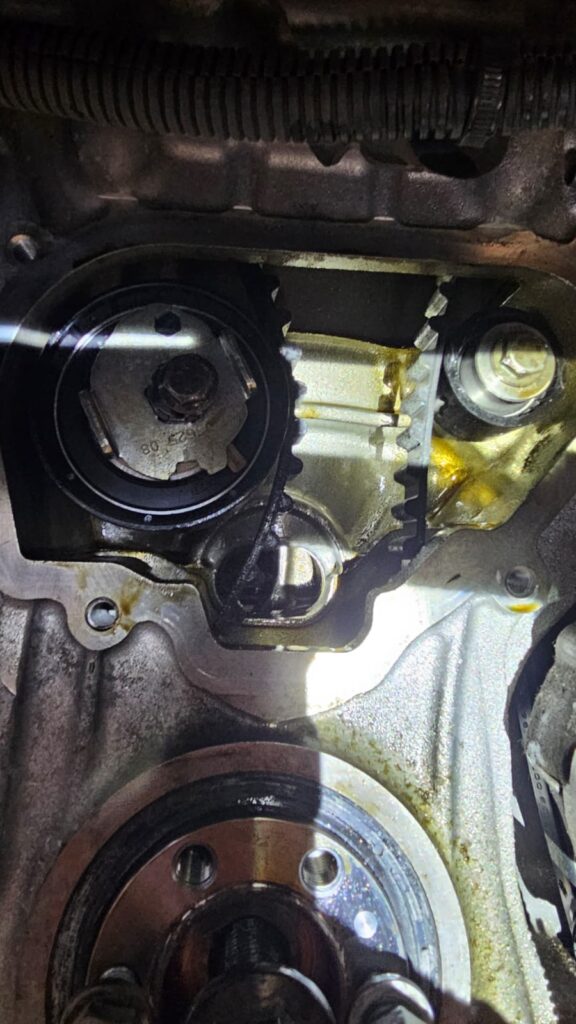
Your car has a language of its own. It communicates through sounds, vibrations, and warning lights. Most of the time, these are subtle whispers, but when a critical component like a wet belt begins to fail, those whispers can quickly become a desperate shout for help. Ignoring these signals is one of the most financially perilous decisions a car owner can make.
A wet belt, or “Belt-in-Oil” system, is designed to be quiet and efficient, running inside the engine and lubricated by oil. This internal placement means that unlike a traditional “dry” timing belt, you can’t simply inspect it for cracks or wear. You must instead become attuned to the indirect symptoms of its degradation. Failure to identify these signs can lead to sudden, catastrophic engine failure with a repair bill that can easily run into the thousands.
This article details the seven most common telltale signs of a failing wet belt. We will not only list the symptoms but also explain the mechanical reasons behind them, giving you the knowledge to act decisively and save your engine from irreversible damage.
Sign 1: The Flickering Oil Pressure Warning Light
The Symptom: You’re driving, and for a split second, the red oil can symbol flickers on your dashboard, then disappears. It might happen when you turn a corner, brake hard, or only on startup. It’s easy to dismiss as a sensor glitch, but it’s arguably the most urgent warning sign of all.
The Mechanical Reason: This is the classic symptom of oil starvation caused by wet belt delamination. As the rubber from the belt degrades, it forms a sludge that clogs the oil pickup strainer in the sump. When the oil sloshes around during vehicle movement, the pump might momentarily be able to suck in enough oil, causing the light to go out. However, the flicker is a clear indication that the oil supply is critically restricted. Continuous operation in this state will destroy your engine’s bearings and turbocharger due to a lack of lubrication. If you see this light, your immediate action should be to safely stop the car and have it towed to a specialist.
Sign 2: A New or Unusual Engine Noise
The Symptom: You notice a low-end rattling, a rhythmic ticking, or a general increase in engine harshness, especially when the engine is cold. The engine may sound more like a diesel than the quiet petrol unit you’re used to.
The Mechanical Reason: Noise can originate from two primary issues related to the wet belt. First, if the belt has stretched due to age or oil contamination, it will create slack in the system. This slack can cause the belt to flap or whip against its guides and casing, creating a rattling sound. Second, the noise could be the sound of an oil-starved top end. The camshafts, lifters, and variable valve timing components are not receiving adequate oil pressure due to the clogged strainer. This metal-on-metal contact creates a distinct ticking or tapping noise that is a precursor to major wear.
Sign 3: The Check Engine Light is On (P0016, P0017 Codes)
The Symptom: The amber “check engine” or “service engine soon” light illuminates on your dashboard. You may or may not notice any other symptoms at this stage.
The Mechanical Reason: When a diagnostic tool is plugged in, a failing wet belt will often trigger specific fault codes, most commonly P0016 (Crankshaft Position – Camshaft Position Correlation Bank 1 Sensor A) or P0017. In simple terms, this code means the engine’s brain, the Engine Control Unit (ECU), has detected that the crankshaft and camshaft are no longer perfectly synchronized. A stretched or degraded wet belt can jump a tooth on its sprockets, or the slack can be enough to throw the timing correlation out of the ECU’s acceptable range. This is a definitive sign that the mechanical timing of the engine is compromised.
Sign 4: Noticeable Loss of Performance and Poor Fuel Economy
The Symptom: Your car feels sluggish, lazy, and unresponsive. It struggles to accelerate, especially up hills, and you notice you’re visiting the petrol station more often than you used to.
The Mechanical Reason: Engine timing is everything. It dictates the precise moment the intake and exhaust valves open and close in relation to the piston’s movement. When the wet belt stretches, this precise timing is lost. The valves may open too late or close too early, leading to inefficient combustion. The engine can’t breathe properly or expel exhaust gases effectively. This results in a significant drop in power output and a corresponding increase in fuel consumption as the ECU tries, and fails, to compensate for the mechanical slack.
Sign 5: Rough Idle and Engine Misfires
The Symptom: When you’re stopped at a traffic light, the engine idles unevenly, shakes, or vibrates more than usual. In more advanced stages, it may feel like the engine is about to stall, and you might experience noticeable misfires during acceleration.
The Mechanical Reason: A rough idle is a direct consequence of incorrect valve timing. The inconsistent synchronization between the crankshaft and camshaft means that the combustion process in one or more cylinders is unstable. This leads to the rough, stuttering sensation you feel. A misfire occurs when the air-fuel mixture in a cylinder fails to ignite properly, often because the valves are not timed correctly to seal the cylinder for the compression stroke.
Sign 6: Difficulty Starting or Failure to Start
The Symptom: The engine takes longer than usual to crank before it finally starts. In a more severe case, the engine will turn over rapidly with a smooth, “whirring” sound but will never catch and start.
The Mechanical Reason: A stretched belt can make starting difficult because the initial timing is too far out for the ECU to achieve ignition. In the case of a complete failure where the belt has snapped, the camshafts will stop turning entirely. When you turn the key, the starter motor will spin the crankshaft, but with no connection to the camshafts, the valves won’t operate. The engine has no compression, which is why it spins over quickly and smoothly without any sign of firing up. At this point, severe internal damage has almost certainly occurred.
Sign 7: Visible Debris in the Engine Oil
The Symptom: During an oil change or a simple dipstick check, you notice something is wrong. The oil may look glittery, or you might see small, black, rubbery specks on the dipstick or clinging to the inside of the oil filler cap.
The Mechanical Reason: This is the physical evidence of wet belt delamination. You are literally seeing pieces of your timing belt suspended in your engine oil. It’s the “smoking gun” that confirms the belt is disintegrating. If you see this, it is not a question of if the engine will fail, but when. The oil pickup strainer is inevitably already partially or fully clogged, and a full wet belt replacement, along with a sump removal and strainer clean, is immediately required.
Conclusion: Don’t Delay, Diagnose Today
These seven signs are your engine’s final warnings. Unlike a flat tyre or a dead battery, a failing wet belt is a silent threat that grows more dangerous with every mile you drive. Recognizing even one of these symptoms warrants an immediate call to a qualified mechanic who specializes in these engines. A professional diagnosis can be the difference between a manageable, preventative wet belt replacement and the financial heartbreak of a full engine rebuild. Listen to your car—it’s trying to save you from a disaster.
Are you experiencing any of these symptoms? Don’t risk a catastrophic failure. Contact our expert technicians immediately for a comprehensive diagnostic check and professional advice.